IAE Savoie Mont Blanc Hosts Erasmus+ SHERLOCK Week Focusing on International Marketing and AI
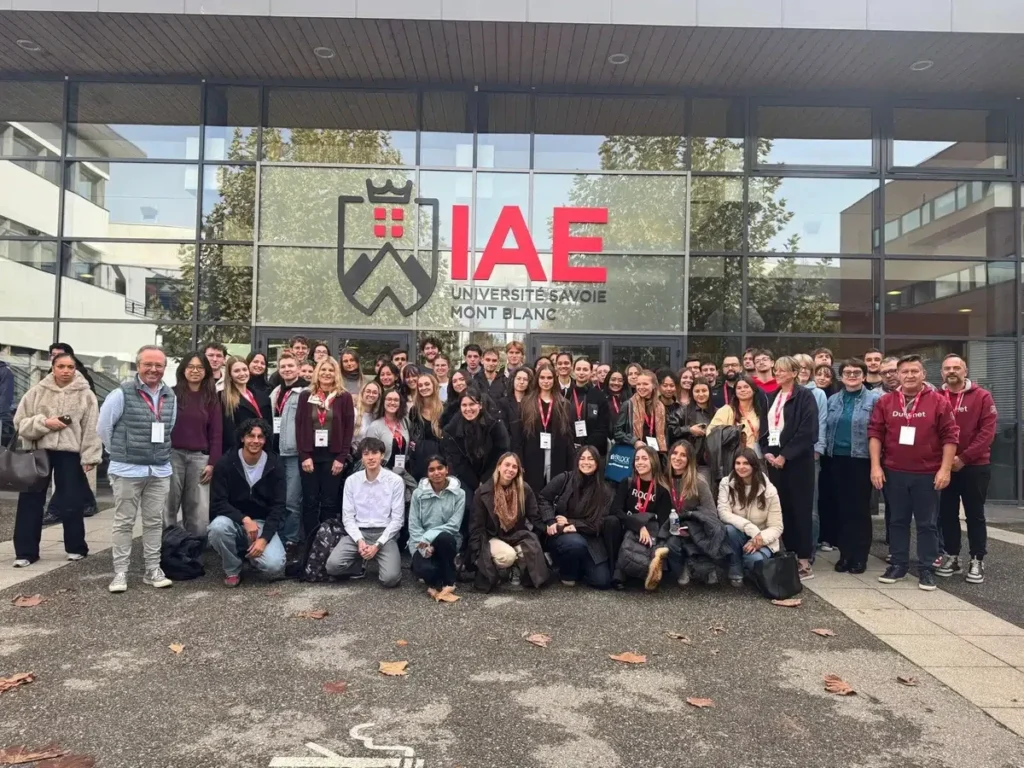
More than 70 European students and faculty members recently gathered at the IAE Savoie Mont Blanc in Annecy for a major milestone in higher education innovation. Hosted from October 19 to 23, 2026, the first Learning, Teaching, and Training Activity (LTTA) under the Erasmus+ SHERLOCK project brought together academic institutions across Europe to tackle a strategic marketing challenge presented by Kipsta, the team sports brand of Decathlon.
The SHERLOCK initiative, formally titled Survey Higher Education Research – Learning through Online Collaboration & Knowledge, aims to revolutionize how market research is taught in higher education. By combining rigorous methodology, cross-cultural collaboration, and critical artificial intelligence usage, the five-day intensive workshop provided participants with hands-on experience in global market analysis and strategic decision-making.
Erasmus+ SHERLOCK Project Launches First International Training Week in Annecy
The international activity served as an essential pilot phase for developing the SHERLOCK serious game, an innovative digital learning platform designed to enhance market research education across universities. Coordinated at the IAE Savoie Mont Blanc campus in Annecy, the event welcomed student delegations and faculty from partner institutions including Howest Bruges, EUBA Bratislava, THA Aschaffenburg, CEU Valencia, and HEG Genève.
Throughout the week, participants were tasked with solving a concrete business challenge defined by Kipsta. Working in multicultural teams, students stepped into the roles of market research analysts, navigating every stage of a commercial study from problem formulation to final strategic recommendations presented before an expert jury.
Real-World Market Research Challenge with Decathlon’s Kipsta
To deliver actionable insights for Kipsta, student teams designed and executed a structured research framework aligned directly with corporate objectives. The workflow encompassed qualitative and quantitative methodologies, testing both technical precision and practical analytical skills.
- Qualitative Research Design: Teams formulated key research questions and conducted structured interview guides to capture consumer behavior patterns.
- Quantitative Methodology: Students engineered digital survey tools and managed data collection workflows across diverse demographic samples.
- Data Analysis and Synthesis: Participants synthesized qualitative feedback and numerical data sets to identify actionable market opportunities.
- Executive Pitching: The intensive week concluded with formal jury presentations detailing strategic findings and tailored marketing recommendations for Kipsta leadership.
Intercultural Collaboration and Responsible AI Utilization
In addition to mastering technical research methods, the immersive workshop focused heavily on soft skills and modern technological literacy. Working in diverse international teams required participants to practice cross-cultural communication, collaborative problem-solving, and adaptive project management under tight deadlines.
A central pillar of the SHERLOCK framework is the ethical and critical integration of artificial intelligence tools in research methodologies. Students were encouraged to leverage AI systems for process efficiency while systematically evaluating the reliability, methodological boundaries, and ethical implications of machine-generated outputs. This dual focus prepares future professionals to navigate complex global markets where technology complements human critical thinking.
Building the Strategic Architecture for Educational Serious Games
The insights generated during this initial training activity directly inform the ongoing development of the SHERLOCK serious game platform. By testing learning mechanisms in a live, collaborative setting, educators gathered vital observational data and student feedback to refine the digital learning software.
As higher education institutions adapt to evolving economic and digital landscapes, initiatives like SHERLOCK highlight the necessity of structured academic frameworks. Educational organizations managing complex international programs face operational exposure similar to broader corporate entities, making robust planning and French University Networks Alert Prime Minister Over Education Code Reclassification Risks a critical topic for institutional stability. Simultaneously, students participating in international mobility programs benefit from practical safeguards, including tailored benefits like Hassle-Free International Travel Insurance during abroad activities.
Key Components of the SHERLOCK Academic Initiative
| Project Pillar | Core Objective | Practical Application |
|---|---|---|
| Market Research Mastery | Develop rigorous qualitative and quantitative research competencies. | Real business case study provided by Kipsta (Decathlon). |
| Ethical AI Integration | Promote critical and responsible usage of artificial intelligence tools. | Methodological validation of machine-assisted data analysis. |
| Cross-Cultural Collaboration | Enhance international teamwork and intercultural communication. | Multinational student teams representing six European universities. |
Frequently Asked Questions
What is the main objective of the Erasmus+ SHERLOCK project?
The Erasmus+ SHERLOCK project aims to create an innovative serious game platform for higher education, helping students master market research methodologies through international online collaboration, critical thinking, and responsible artificial intelligence applications.
Which universities participated in the IAE Savoie Mont Blanc SHERLOCK week?
The activity hosted over 70 participants from six partner institutions: Université Savoie Mont Blanc (USMB), Howest Bruges, EUBA Bratislava, THA Aschaffenburg, CEU Valencia, and HEG Genève.
How was Decathlon’s Kipsta involved in the project?
Kipsta, Decathlon’s team sports brand, provided a real-world strategic marketing challenge that served as the practical case study for student research teams during the intensive five-day international workshop.
Com informações de Portal de Notícias

About the Author: Dilsom oliveira
A professional dedicated to producing content for the automotive and insurance sectors, with experience covering topics such as insurance contracts, types of coverage, deductibles, vehicle maintenance, and driver rights. Their work aims to guide the reader with reliable and up-to-date information, facilitating decision-making in different contexts related to vehicle use and protection.